
I’ll say it: these cottage cheese egg bites have quietly taken over my breakfast routine. They’re soft, fluffy, and packed with protein, and I can make a dozen in about half an hour with one blender and a muffin tin.
I started making them on a Sunday when I was tired of rushing out the door with nothing but coffee. I wanted something I could grab straight from the fridge, and I’d been eyeing those pricey coffee-shop egg bites for ages. This egg bites recipe with cottage cheese gave me that same velvety texture at home, and the muffin tin smelled amazing the whole time.
Now I make a batch most weekends. They’re good plain, good loaded with whatever’s left in my fridge, and good reheated at 7 a.m. when I’m half awake.
Recipe Card Details
- Prep Time: 5 minutes
- Cook Time: 25 minutes
- Total Time: 30 minutes
- Servings: 12 big egg bites
- Difficulty: Easy
- Dietary notes: Gluten-free, vegetarian, and low-carb. About 78 calories and 7g protein per egg bite, based on 8 eggs and no extra add-ins.
Ingredients
- 8–10 large eggs (use 8 if you’re adding a full cup of mix-ins, 9 for a half cup)
- 1 cup cottage cheese (any fat percentage works; I use whatever I have)
- ½ teaspoon fine sea salt, or to taste
- ¼ teaspoon freshly ground black pepper, or to taste
- ½ cup shredded cheese, such as medium cheddar or mozzarella (use any melty cheese you like)
- ½–1 cup optional add-ins, such as chopped ham or bacon, spinach, chives, green onion, or chopped cooked zucchini, bell pepper, or onion
- Cooking spray, for the muffin tin (skip it if you’re using silicone cups)
Step-by-Step Instructions
- Preheat the oven to 325°F. Spray a 12-cup non-stick muffin tin with cooking spray. If you’re using silicone muffin cups, you can skip the spray.
- Add the eggs, cottage cheese, salt, and pepper to a blender. I love how simple this is. No whisking, no lumpy curds.
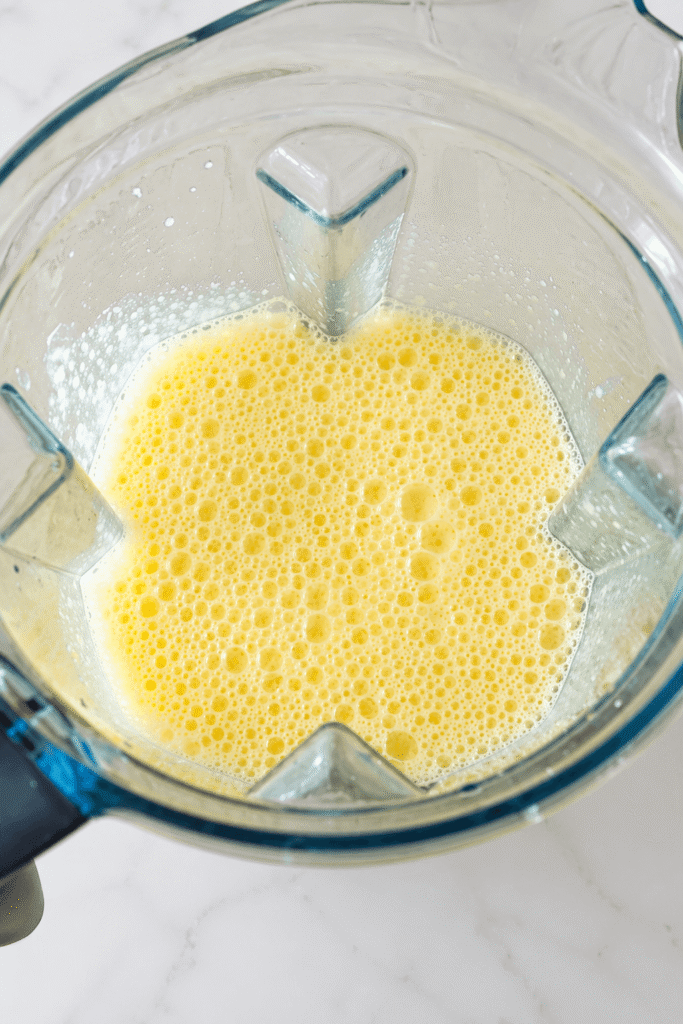
- Blend until completely smooth. This is what gives you that silky, custardy texture. It only takes about 20–30 seconds.
- Divide the shredded cheese and any add-ins among the muffin cups. I always add the cheese and mix-ins first so they don’t all float to the top.
- Pour in the egg mixture. Fill each cup about ¾ full. They puff up as they bake, so leave a little room.
- Bake at 325°F for 22–25 minutes. The tops should be set and the edges and centers fully cooked. Mine usually take the full 25.
- Let them rest for 5 minutes in the tin. They deflate a little as they cool, which is totally normal. Run a thin knife or spoon around the edges and lift them out.
- Air fryer option: cook at 300°F for 12–14 minutes. If the tops brown too fast, cover them lightly with foil.
Tips & Variations
Adjust your eggs for your add-ins
What works for me is this: the more mix-ins you use, the fewer eggs you need, because the cups need room. Remove 1 egg for every additional ½ cup of add-ins. So I use 9 eggs with ½ cup of add-ins and 8 eggs with a full cup.
My favorite combos
I like ham and green onion when I want something classic. Spinach with extra cheddar is my go-to when the fridge is nearly empty. Chopped bacon and chives is the one that disappears fastest at my house.
Storage and reheating
Let the egg bites cool completely, then store them in the fridge for up to 3 days or in the freezer for up to 3 months. For frozen ones, thaw in the fridge overnight. Reheat in the microwave for about 30 seconds, or in the air fryer at 350°F for 5 minutes or until heated through.
Don’t skip the blender
I tried stirring everything by hand once, and the texture just wasn’t the same. The blender is what makes these smooth instead of curdy.
FAQ
Do cottage cheese egg bites taste like cottage cheese?
Not really. Blending melts the curds into the eggs, so you get a creamy, mild bite. If anything, it adds a subtle richness and keeps the eggs from turning rubbery.
Can I make egg bites without cottage cheese?
Yes, though the texture will change. I’d try ricotta or plain Greek yogurt in the same amount, or cream cheese for a richer, denser bite. Cottage cheese is my favorite because it adds protein and keeps them soft without collapsing.
Why did my egg bites deflate?
That’s completely normal. They puff up in the oven and settle as they cool. If they look soggy or watery, it’s usually from wet add-ins, so cook any veggies first and pat them dry.
Can I freeze this cottage bites egg bites recipe?
Absolutely. Cool them completely, freeze them in a zip-top bag, and they’ll keep for up to 3 months. Thaw overnight in the fridge before reheating.
How many calories are in cottage cheese egg bites?
Using 8 eggs and no extra add-ins, each egg bite is about 78 calories with 7g of protein. Your numbers will shift a little depending on your cheese and mix-ins.
The Science Behind This Recipe
What eggs do when they cook
Raw egg proteins are tightly folded, and they float separately in water. Heat makes them unfold (denature), and the unfolded strands bond to each other, forming a net that traps water. That net is what turns liquid into a soft solid.
Different proteins set at different temperatures:
- Egg white proteins start setting around 140-150°F (60-65°C).
- Yolk proteins set around 150-160°F (65-70°C).
- Ovalbumin, the main white protein, firms up at roughly 175°F (80°C).
This is why a 325°F oven works so well. It’s gentle enough that the proteins link up slowly into a loose, tender net. At higher heat the net tightens, squeezes out its water (syneresis), and turns rubbery and weepy.
What the cottage cheese does
Cottage cheese is mostly casein protein, plus whey proteins, fat, and water. Casein is very heat-stable and doesn’t set the way egg protein does. So when blended into the eggs, it works like a spacer.
- It gets between the egg proteins and stops them bonding too tightly, so the texture stays soft instead of firm.
- It adds protein and holds onto water, which is why the bites don’t collapse or turn rubbery as fast.
- It works like the milk or cream in a custard: more liquid and dairy protein in the mix means a more delicate gel.
Why blending matters
The blender does two jobs. First, it breaks the curds into tiny particles, so you get a smooth, uniform texture rather than lumpy bits. Second, it mixes yolk lecithin (an emulsifier) with the fat and water so everything blends evenly. It also whips in tiny air bubbles, which is part of why the bites puff up.
Why they puff, then sink
In the oven, the water in the mixture turns to steam and the trapped air expands. Both push the egg mixture upward while the protein net is still stretchy. Once the net sets, it holds that shape.
As the bites cool, the gas contracts and the steam condenses, so they settle a bit. That’s why they deflate, and it’s also why you fill the cups only about ¾ full.
Salt, resting, and carryover
Salt does more than season. Its ions shield the electrical charges on proteins, which helps them bond more evenly. The result is a slightly finer, more tender gel.
Resting for 5 minutes in the tin lets carryover cooking finish the centers with leftover heat, so you don’t have to leave them in the oven long enough to dry out the edges.
Browning and flavor
The golden tops come from the Maillard reaction, where proteins and sugars react on the dry surface. It starts around 285°F (140°C) and builds savory, toasty flavor. Cheese on top browns especially well because of its proteins and milk sugar.
In the air fryer, fast-moving hot air heats the surface quickly, which is why the recipe says to cover them with foil if they brown too fast.
Why overcooked eggs smell and turn gray-green
Overcooked egg whites release hydrogen sulfide from sulfur-containing proteins. It reacts with iron in the yolk to form iron sulfide, a gray-green ring and a sulfurous smell. That’s why a precise bake time matters. It’s also why gentle reheating helps leftovers: a hot, long microwave blast can push them past the same threshold.
Add-ins, freezing, and reheating
- Wet vegetables release water as they cook, and that water pools around the bite. Cooking and patting them dry first prevents it.
- Freezing forms ice crystals that damage the protein net. On thawing, some water leaks out, so frozen bites are a little less silky. Thawing in the fridge and reheating gently keeps the texture best.

Cottage Cheese Egg Bites (Easy Oven Recipe)
Equipment
- 12-cup non-stick muffin tin Or use silicone muffin cups
- High-speed blender
- Measuring cups and spoons
- Kitchen scale
- Thin knife or small offset spatula
- Cooling rack
- Air fryer Optional, for the alternative method
Ingredients
- 8-10 400-500 g large eggs Use 8 with 1 cup of add-ins 9 with ½ cup
- 1 cup 225 g cottage cheese Any fat percentage works
- ½ tsp 3 g fine sea salt Or to taste
- ¼ tsp 0.5 g freshly ground black pepper Or to taste
- ½ cup 55 g shredded cheddar or mozzarella Any melty cheese works
- ½-1 cup 60-120 g optional add-ins Chopped ham or bacon spinach, chives, green onion, or cooked zucchini, bell pepper, or onion
- cooking spraySkip if using silicone cups
Instructions
- Preheat. Preheat the oven to 325°F (160°C). Spray a 12-cup non-stick muffin tin with cooking spray, or use silicone cups and skip the spray.
- Blend. Add the eggs, cottage cheese, salt, and pepper to a blender. Blend 20-30 seconds until completely smooth.
- Fill the cups. Divide the shredded cheese and any add-ins among the muffin cups. Adding them first keeps them from floating to the top.
- Pour. Pour the egg mixture into each cup, filling about ¾ full. Leave a little room because they puff as they bake.
- Bake. Bake for 22-25 minutes, until the tops are set and the centers are fully cooked.
- Rest and serve. Let the egg bites rest in the tin for 5 minutes. Run a thin knife around the edges and lift them out.
Notes
- Adjust your eggs for your add-ins. Remove 1 egg for every additional ½ cup (60 g) of add-ins. Use 9 eggs with ½ cup of add-ins and 8 eggs with 1 cup.
- Cook watery vegetables first. Pat them dry so the egg bites don’t turn soggy.
- Don’t skip the blender. It gives you a smooth, silky texture instead of curdy eggs.
- Storage: Cool completely. Keep in the fridge up to 3 days or in the freezer up to 3 months.
- Reheating: Thaw frozen bites in the fridge overnight. Microwave for about 30 seconds, or air fry at 350°F (175°C) for 5 minutes, until heated through.
- Nutrition is an estimate per egg bite, based on 8 eggs and no extra add-ins.

